
Let’s say you have a new digital product. Maybe it’s a killer mobile app, or perhaps a mission-critical SaaS platform. You know your internal team simply cannot build it fast enough. Or maybe they lack the specific expertise required.
So, you look to outsourced product development companies. And understandably so, with a Deloitte survey revealing that 45% of outsourced key functions cover product development.
But this is where things get tricky. While partnering with external providers can slash your time-to-market and hiring costs, choosing the wrong one means delays, budget blowouts, and a finished product that looks nothing like your vision.
Forget the standard advice like ‘check references.’ That’s too easy. You need to know the subtle pitfalls, the ones that cost you time, money, and sleep down the line.
We’ll cut through the fluff and show you the seven critical mistakes smart product leaders skip when they evaluate potential development partners. Let’s make sure your product vision doesn’t get lost in translation.
Table of Contents
- What Does Outsourcing Product Development Mean?
- Types of Product Development Services You Can Outsource
- What are the Benefits of Outsourced Product Development?
- 7 Things to Avoid When Choosing Outsourced Product Development Companies
- Work with a Trusted Product Development Outsourcing Provider
- FAQs
What Does Outsourcing Product Development Mean?

Outsourcing product development means you delegate the creation of a new product, or a specific feature set within an existing product, to an external, third-party vendor. It involves engaging an entire team or agency that specialises in the complete product lifecycle.
You’re essentially leveraging external resources to perform tasks your in-house team either cannot handle or would struggle to complete efficiently. This arrangement gives your business access to specialist skills, immediate scalability, and often significant cost efficiencies.
You remain the product owner. You still own the what and the why. But the outsourced product development companies you hire take charge of the how.
They manage the technical delivery, including system architecture, coding, quality assurance, and deployment. You pay for their specialised expertise and their established processes, which typically reduce the complexity and risk of building software from scratch.
4 Types of Product Development Services You Can Outsource
Product development is a sequence of distinct phases. You can choose to outsource the entire pipeline or just select parts where your team needs the biggest boost.
Here are the primary areas you can confidently hand over to outsourced product development companies:
- Discovery and Definition. Your vendor can lead workshops, perform market analysis, validate ideas, and create high-level requirements.
They help you refine your Minimum Viable Product (MVP) scope. When you outsource this, you ensure your concept is technically feasible and market-ready before you spend a penny on code.
- UX/UI Design. You outsource design experts to craft the user experience (UX) flows and user interface (UI) components. They conduct usability testing and create high-fidelity prototypes.
This ensures your product feels intuitive and looks professional from day one.
- Engineering and Implementation. Expert engineers write clean, scalable code using specific technologies (like React, Python, or Go). This phase also includes DevOps setup, ensuring continuous integration and continuous delivery (CI/CD) pipelines work smoothly.
You gain access to modern technical skills that would take months or years to hire internally.
- Quality Assurance (QA) and Maintenance. QA specialists run rigorous tests (manual and automated) to catch bugs and performance issues.
After launch, the partner can handle ongoing support, bug fixes, and feature updates. This allows your core team to focus on new business strategies while your current product remains stable and secure.
What are the Benefits of Outsourced Product Development?
Smart product leaders choose to work with outsourcing providers because they gain distinct, quantifiable advantages over going it alone:
Accelerate Time-to-Market
You launch your product faster by up to 25% according to McKinsey and Company when you bypass the lengthy process of hiring, onboarding, and training an in-house team.
Outsourced providers already have dedicated, cross-functional teams ready to start immediately. This speed is crucial in competitive markets where being first often means capturing the most market share.
Access Specialised Professionals
Your local hiring market may not offer the highly specific skills you require. When you outsource, you unlock a global workforce.
You have a broader pool to select experts who already possess the exact niche skills your project demands, guaranteeing higher quality code and architecture.
Significantly Reduce Overhead Costs
While cost should not be your only driver (more on that later), it’s a major factor. You save up to 70% of your budget on recruitment, salary, benefits, and office space.
Outsourced product development companies also often operate in regions where labour costs are lower, allowing you to get high-quality engineering hours at a more affordable rate than your domestic market allows.
Improve Flexibility and Scalability
When the market shifts, you scale the team size up or down with ease. Unlike permanent hires, a contractual agreement with a provider allows you to rapidly add engineers during peak development and then quickly reduce the team size when entering a maintenance phase.

7 Things to Avoid When Choosing Outsourced Product Development Companies
Successfully partnering with an external team hinges on avoiding common, yet often overlooked, mistakes during the vetting phase.
You must go beyond the pretty pitch deck and look for structural flaws in their business and process:
1. Focusing Only on the Hourly Rate
You naturally look for the cheapest vendor. But you fail when you equate low hourly cost with low total cost.
A provider who charges $30 per hour might take three times longer to deliver a feature than a provider charging $70 per hour.
Calculate the Total Cost of Ownership (TCO) for the feature delivery, not just the raw cost of labour. Ask, ‘How many hours will your team actually need to complete this specific scope, including review and QA?’.
Demand fixed-scope estimates or clear data on their velocity and code quality to prove their efficiency justifies their rate.
2. Ignoring Team-Level English Proficiency
The salesperson spoke fluent English, which impressed you. You mistakenly assume the entire development team communicates at the same level.
When the project starts, you discover the lead engineer or the QA specialist struggles to articulate complex technical issues in real-time. This silence or ambiguity causes massive delays.
You must insist on speaking directly with the developers, the project manager, and the QA lead before signing the contract. Give them a scenario and ask them to explain their proposed technical solution to you.
If you can’t easily understand the people building your product, you simply cannot manage the project effectively.
3. Delegating Product Ownership Entirely
You hire an outsourced team to handle the execution, but you mistakenly hand over the strategic vision as well. Don’t tell the provider to ‘Just build it,’ and then detach yourself from daily stand-ups and sprint reviews.
This creates a massive void. The vendor is a builder, not a replacement product owner. They cannot read your mind about market needs or evolving business goals.
Maintain a single, dedicated, in-house product owner who actively participates in the daily life of the outsourced team. This person sets priorities, answers questions instantly, accepts or rejects work, and ensures the product aligns with the business strategy.
4. Relying Only on Portfolio Demos
The provider showed you a stunning case study of a major app they built. You incorrectly assume the specific senior experts who built that app will work on your project.
Often, the star developers featured in the portfolio have since moved on, or they are reserved for the company’s largest, highest-paying clients. You might end up with a junior team that was quickly onboarded.
Demand to know the names, experience, and direct roles of the exact individuals who will work on your product.
Ask for their LinkedIn profiles and specific experience with the technologies you require. Better yet, you should interview the team lead as if they were a full-time hire.
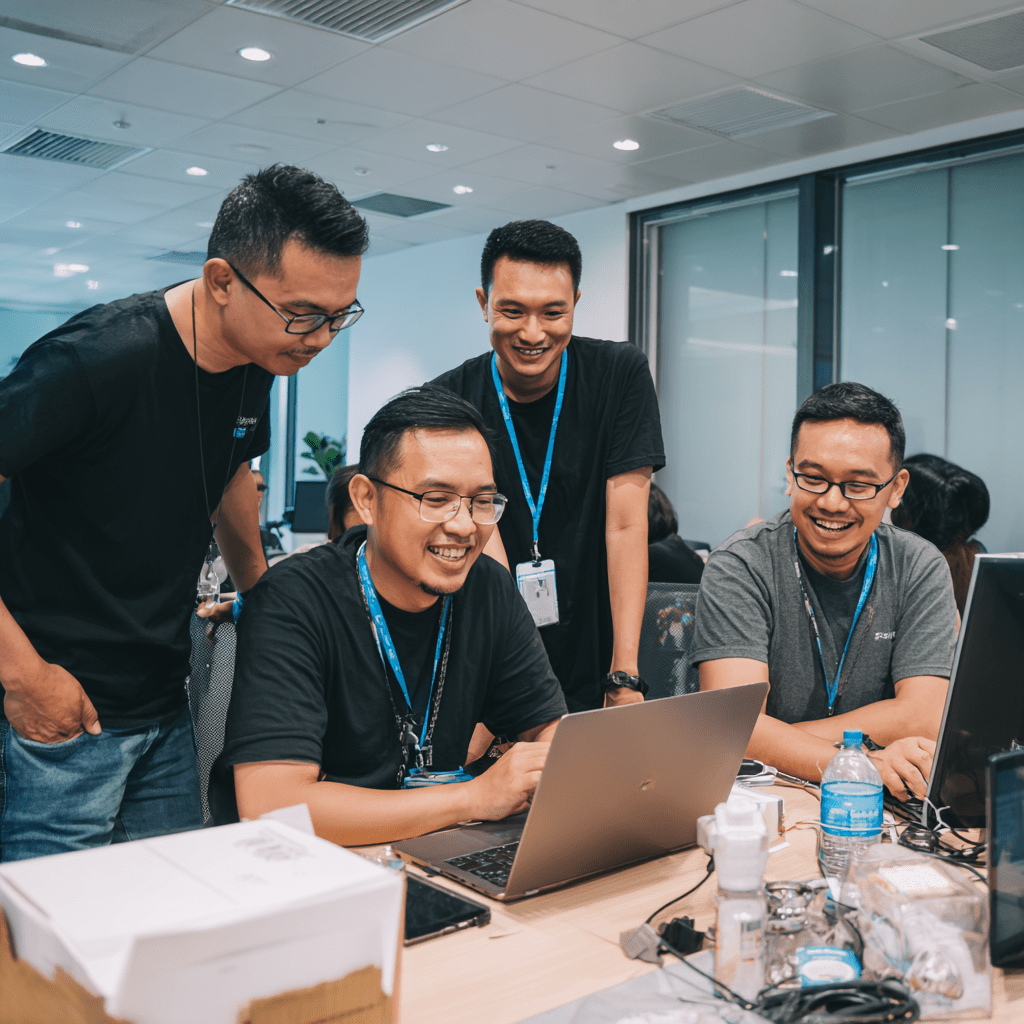
5. Skipping a Formal Paid Trial Sprint
You sign a massive, year-long contract based only on a proposal and a sales pitch. You gamble the entire project budget without testing the working relationship first.
A company’s process looks perfect on paper, but only a real project reveals its communication style, code quality, and ability to meet deadlines.
Insist on a short, paid ‘trial sprint’ (or discovery sprint) of two to four weeks. Give them a small, clearly defined feature to build, ideally one that involves setting up the core architecture.
This short investment allows you to evaluate their velocity and code quality risk-free before you commit to the full engagement.
6. Accepting Vague Intellectual Property Clauses
You see boilerplate contract language about intellectual property (IP) and simply accept it. You fail to verify that the IP transfer is explicitly defined for all contributors across all jurisdictions.
The last thing you need is a former outsourced developer claiming partial ownership of a key algorithm built for your product.
Ensure the contract clearly states that all IP, including source code, designs, and documentation, immediately becomes your sole property upon payment.
You also need a clause confirming the provider has secured IP assignment from every single developer on the project, protecting you from future legal challenges.
7. Having a Fuzzy “Definition of Done”
You define a feature as ‘done’ when the developer says, ‘The code is written.’ You make the mistake of accepting completed code that hasn’t been properly tested, deployed, and approved by the product owner.
This incomplete definition pushes bugs and problems down the line, increasing rework exponentially.
Collaborate with your provider to create a non-negotiable Definition of Done (DoD). This DoD must clearly state that a feature is not truly done until it passes automated tests, passes manual QA review, is deployed to a staging environment, and the product owner formally accepts it.
Work with a Trusted Product Development Outsourcing Provider

Vetting outsourced product development companies is a high-stakes activity. Your success depends entirely on finding a partner who not only writes great code but who also communicates flawlessly, manages scope rigorously, and operates with absolute transparency.
You seek a relationship built on trust, efficiency, and shared product ownership. By sidestepping the seven common mistakes we outlined, you transform the vetting process from a risky chore into a strategic advantage.
Set clear expectations, Demand transparency, and secure your product’s future success. You deserve a partner who helps you win the market, not just finish the code.
FAQs
Is outsourced product development cheaper than hiring an in-house team?
The upfront answer is often yes, but you must not assume it’s always cheaper. Outsourcing typically offers lower labour rates because you leverage cost advantages in different global markets.
However, you must factor in the non-labour costs. These include the time your internal team spends managing the vendor, travel for key meetings, and potential costs related to communication overhead.
When you accurately calculate the Total Cost of Ownership (TCO), you find that the most efficient and specialised providers offer the best value, even if their hourly rate is higher than the cheapest option.
What is the biggest risk when using outsourced product development companies?
The biggest risk you face is poor quality control and misalignment of requirements. When a vendor rushes a project or misunderstands a critical feature, the resulting technical debt costs significantly more to fix later than it would have cost to build correctly the first time.
You mitigate this by maintaining a robust Definition of Done, ensuring your internal product owner stays actively engaged, and by demanding regular, transparent code reviews from the vendor’s team.
How do you protect your intellectual property when outsourcing abroad?
You protect your intellectual property (IP) by securing airtight contractual agreements right from the start.
You must ensure your contract includes clear clauses that state all work product, including source code and documentation, immediately transfers ownership to you.
Furthermore, the outsourcing company must warrant that they secure IP assignment from every single engineer who touches your project.
Finally, you should register key patents or copyrights in your own country before sharing the most sensitive aspects of your product.

Dom Procter is a 30-year tech veteran and outsourcing specialist, and the driving force behind Outsourced Staff and Conversational AI. He’s obsessed with one thing: helping businesses grow smarter by combining elite offshore talent with cutting-edge AI – the Hybrid AI model that’s redefining how modern teams operate.