
The math behind modern production is brutal. Some decades ago, a studio could survive on local talent and a modest render farm. Today, the global animation market is sprinting toward a $953 billion valuation by 2035, according to Precedence Research.
This gold rush has created a massive bottleneck: there simply aren’t enough senior seats in high-cost hubs to meet the demand of the streaming wars.
That growth creates pressure. Deadlines shrink. Audience expectations rise. Budgets tighten. Many studios now rely on outsourcing animation to stay competitive.
The goal isn’t primarily because it’s a cheap alternative. It allows you to buy speed, precision, and scale that your local zip code cannot provide. If you want to produce more content without burning out your team or compromising quality, you need to understand how outsourcing animation works in the modern era.
This guide explains the evolution, benefits, services, and strategies that help creative teams scale while protecting artistic integrity.
Table of Contents
- History of Outsourcing Animation
- Why Do Studios Outsource Animation Overseas?
- What Animation Services Can I Outsource?
- 5 Best Practices When Offshoring Animation Work
- Delegate Creative Work Without Losing Your Artistic Soul
- FAQs
History of Outsourcing Animation
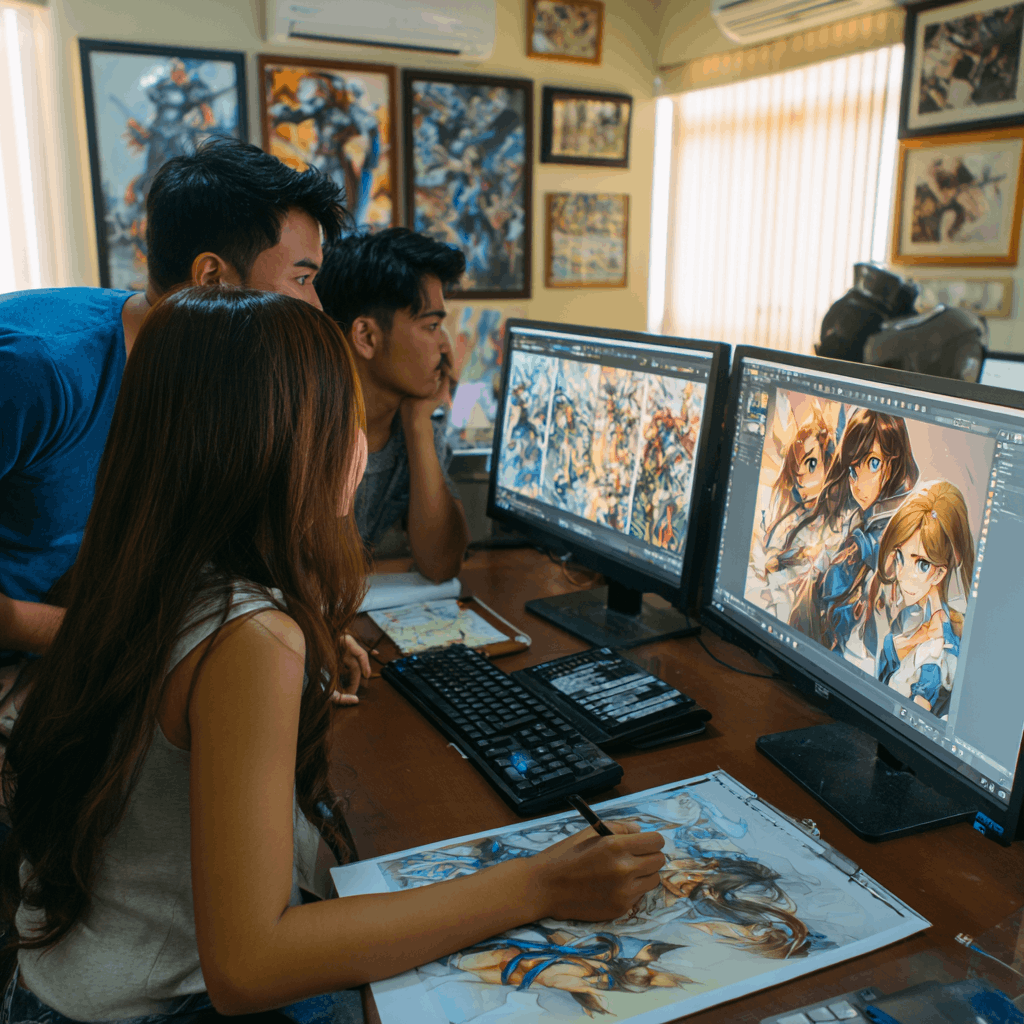
Outsourcing in animation isn’t a modern fad. As early as the 1950s, many affordable American cartoons were produced through a global network of studios in Japan, South Korea, India, the Philippines, and China.
Legendary studios like Hanna-Barbera even began sending labour-intensive in-betweening and ink-and-paint work to Australia in the 70s. They realised that while the soul of the story lived in California, the technical execution could thrive elsewhere.
By the 1990s, the Philippines and India became global hubs. They didn’t just provide cheaper labour, but provided massive scale as well. As software like Autodesk and Toon Boom replaced physical cels, the geographical barriers evaporated.
Today, we’ve moved past the cheap labour phase that animation outsourcing was initially based on. We’re in the period of strategic partnerships.
If you want to outsource animation work, you’d be looking for a studio that shares your technical and creative DNA.
Why Do Studios Outsource Animation Overseas?
We’ll reiterate: If you think this is only about saving a few dollars, you’re missing the bigger picture. Modern outsourcing is a strategic lever that allows small studios to act like giants and giants to act like nimble startups.
Arbitrage of Skills, Not Just Cost
The traditional cost-saving narrative is tired. The real win is skills arbitrage. In hubs like Manila, Seoul, and Tokyo, animation is a prestigious career path.
You gain access to artists who’ve spent ten thousand hours mastering specific techniques, like liquid simulation or high-end rigging, which might be prohibitively expensive or unavailable in your local market.
The 24-Hour Production Cycle
Imagine finishing your day, sending your feedback, and waking up to a fresh batch of renders. Offshoring creates a follow-the-sun workflow.
While your local creative directors sleep, your offshore team executes. This effectively doubles your production speed without increasing your headcount. This speed is a massive competitive advantage in an industry where time to market determines your ROI.
Radical Flexibility for Spiky Workloads
Animation production is notoriously spiky. That means you have months of quiet pre-production followed by a frantic six-month sprint.
Hiring full-time staff for the sprint leads to painful layoffs later. Outsourcing allows you to treat your production capacity like a utility. You dial it up during the heavy lifting and scale it back when the work slows down.
You protect your core team from burnout while keeping your overhead lean.
Specialised Pipeline Integration
Building a full-service internal pipeline for 2D, 3D, VFX, and motion graphics is a technical nightmare. It requires massive investment in hardware and software licences.
When you outsource, you inherit the partner studio’s infrastructure. They already have the render farms. They already have the proprietary tools. You get the output of a multi-million dollar studio for the price of a single project contract.
Tax Incentive and Subsidy Maximisation
Many offshore hubs offer government-backed subsidies or tax rebates for international animation projects.
In fact, the Animation Council of the Philippines (ACPI) and the Center for International Trade Expositions and Missions (CITEM) help studios secure outsourcing deals in the country with incentives and business-matching sessions.
By partnering with studios in specific regions, you tap into financial structures that effectively lower your per-minute production cost beyond just the hourly rate. This soft money often makes the difference between a project getting a green light or staying in development hell.
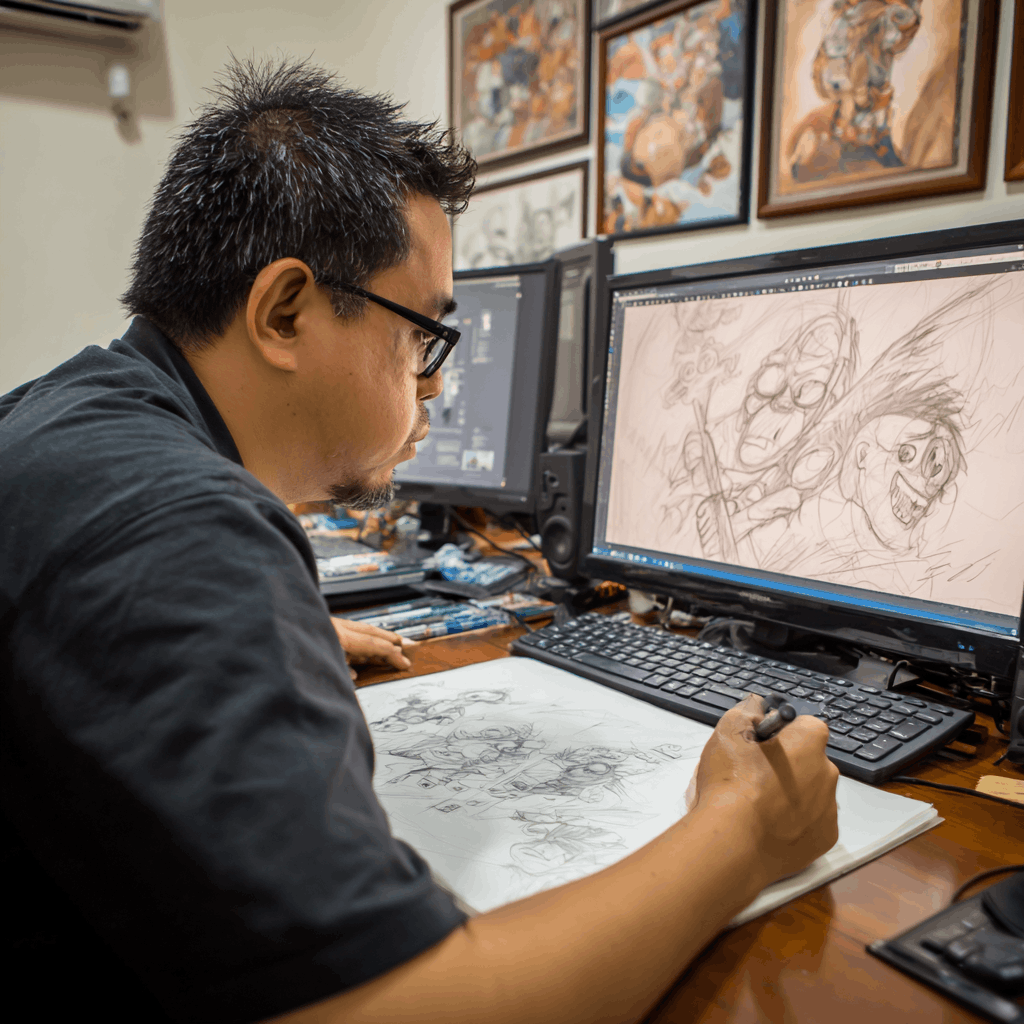
What Animation Services Can I Outsource?
Don’t limit your thinking to just drawing. The modern animation pipeline is a complex assembly line of highly technical tasks.
Almost every link in this chain is ripe for delegation:
- Pre-Visualisation (Pre-Viz). Mapping out complex camera moves and staging in a 3D environment before the real animation starts.
- Concept Art & World Building. Designing characters, props, vehicles, and environments from a narrative brief.
- Storyboarding & Animatic Production. Translating the script into a visual sequence with timed audio to test the story’s pacing.
- 3D Modelling. Building the digital skeletons and geometry of every asset in the show.
- Texture Painting & Shading. Giving digital assets their surface properties, from skin pores to rusty metal.
- Character Rigging. Building the complex digital puppets that animators move, including facial muscle systems and skeletal joints.
- Layout & Background Design. Designing the 2D or 3D stages where the action happens.
- 2D/3D Animation. The actual movement, whether it’s hand-drawn, puppet-based, or high-end CGI keyframing.
- Motion Capture Clean-up. Refining raw data from actors in suits into polished character performances.
- VFX & Particle Simulation. Creating fire, smoke, water, explosions, and magical effects.
- Technical Direction (TD) Support. Writing scripts and tools to automate parts of the pipeline.
- Lighting & Rendering. Setting the mood of the scene and processing the final digital images.
- Compositing. Layering all the separate elements, such as characters, backgrounds, and VFX, into a single, cohesive frame.
- Rotoscoping & Paint. Tracing over live-action footage or removing unwanted elements from a scene (like wires or markers).
- Sound Design & Dubbing. Creating the foley, soundscapes, and localised voice-overs for different markets.
5 Best Practices When Offshoring Animation Work
Success in outsourcing isn’t accidental. It’s engineered. If your offshore project fails, it’s rarely because of the artists; it’s usually because of the infrastructure you built around them.
Here are some tips to help you get started if you’re interested in outsourcing animation work:
1. Establish a Single Source of Truth
Chaos lives in email threads. You must use a dedicated production management tool like ShotGrid or ftrack. Every note, every version, and every deadline must live in one place.
If a change isn’t in the system, it doesn’t exist. This eliminates the ‘I thought you meant the other blue’ conversations that kill budgets and time.
2. Over-Communicate the Artistic Intent
Animators aren’t mind readers. If you provide a vague brief, you get a generic result. You must provide detailed style guides, mood reels, and specific references for timing and weight.
Don’t just tell them what to do. Tell them why the character is feeling a certain way. The more context you provide, the less fixing you have to do in the final pass.
3. Use Incremental Milestones
Never wait until the end of a sequence to see the work. Implement a blocking pass, a secondary pass, and a final pass review.
Catching a movement error in the blocking stage takes ten minutes to fix. Catching it after the final render takes ten hours and costs hundreds of dollars. Frequency of feedback is the best insurance policy for your quality standards.
4. Cultural Alignment and Overlap
Don’t just hire a studio based on their portfolio. Ensure your working hours have at least a two-hour overlap for live syncs. Use this time for video calls, not just text, chat, or email.
Seeing faces and hearing voices builds the trust necessary to navigate the high-stress periods of a production cycle.
5. Decentralised Security Audits
Of course, your intellectual property (IP) is your most valuable asset. Don’t take a studio’s word for their security. Require a breakdown of their trusted partner network (TPN) compliance or equivalent security audits.
Ensure their workstations are physically or digitally isolated from public networks. A leak doesn’t just hurt your current project; it could also destroy your reputation with investors and distributors.
Delegate Creative Work Without Losing Your Artistic Soul
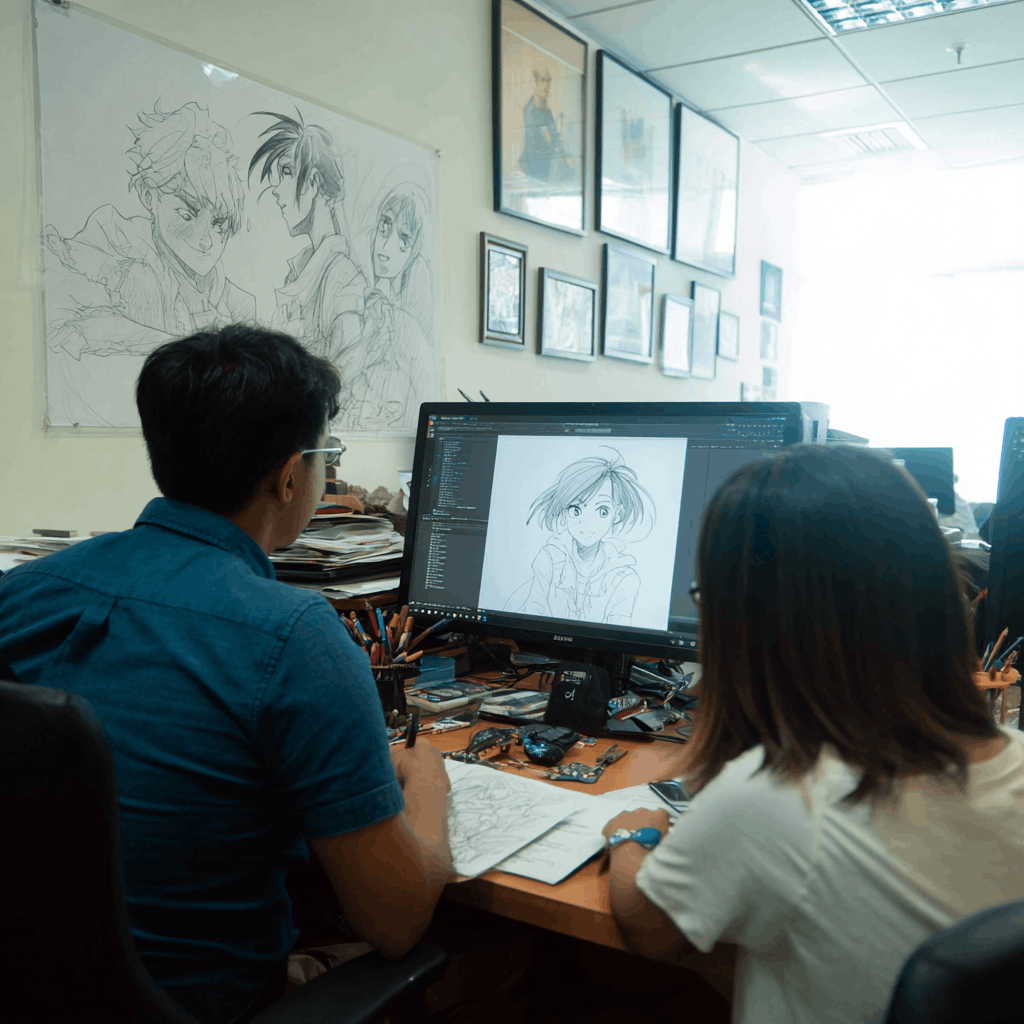
The biggest fear every creative lead has is that the work will come back soulless. You worry that by sending the work overseas, you will lose the spark that makes your project special.
This only happens if you treat your offshore team like a vending machine where you put in money and expect art to pop out.
Instead, treat them as an extension of your own studio. Share your vision. Celebrate the wins. When an offshore artist adds a small, clever detail that wasn’t in the brief, acknowledge it.
When you empower your partners to be creative problem solvers rather than just pixel pushers, the quality of the work skyrockets. You don’t lose your artistic soul, but instead multiply your ability to express it.
You have the story. Now, give it the scale it deserves. If you are ready to stop managing bottlenecks and start managing growth, it’s time to build your global team. Reach out to us at Outsourced Staff today and let us turn your sketches into a spectacle.
FAQs
What are the main benefits of outsourcing animation?
The primary benefits of outsourcing animation include significant cost reduction (often up to 70%), access to a global pool of specialised talent, and the ability to scale your production capacity rapidly without long-term overhead.
Outsourcing animation also allows your core team to focus on high-level creative direction and storytelling while the partner studio handles the labour-intensive execution.
Is outsourcing animation bad for quality?
No. In fact, many of the highest-grossing films and most popular television shows use offshore animation studios for the bulk of their production since the 1950s.
Quality depends entirely on your vetting process, the clarity of your communication, and the robustness of your production pipeline. When managed correctly, outsourced work is indistinguishable from in-house production.
How do I protect my intellectual property when outsourcing?
You protect your IP through rigorous legal contracts, including non-disclosure agreements (NDAs) and clear work-for-hire clauses. Ensure your partner uses secure file transfer protocols and has secure server environments.
Most reputable international animation studios are used to working with high-profile IP and have existing security certifications to put your mind at ease.

Dom Procter is a 30-year tech veteran and outsourcing specialist, and the driving force behind Outsourced Staff and Conversational AI. He’s obsessed with one thing: helping businesses grow smarter by combining elite offshore talent with cutting-edge AI – the Hybrid AI model that’s redefining how modern teams operate.